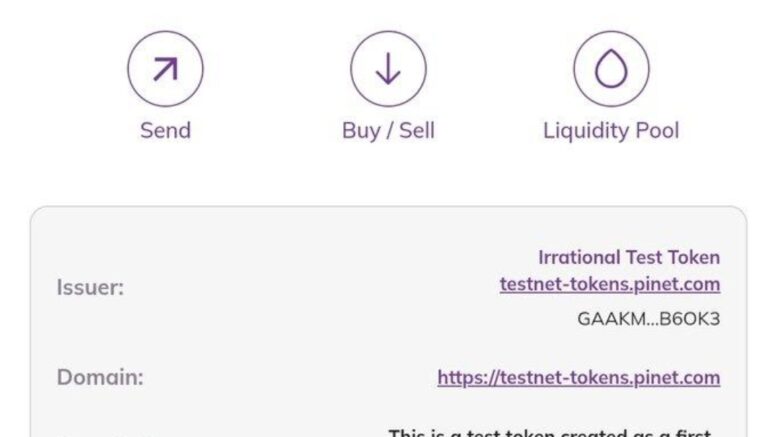
JAKARTA – Pi Network is drawing renewed attention after simulated versions of USDT and DOGE appeared in the Pi Ecosystem Wallet on Testnet. The development has sparked discussion within the Pi community about the network’s ongoing experiments with decentralized finance (DeFi).
However, the appearance of these assets should not be interpreted as the launch of real USDT or Dogecoin on Pi Mainnet. The tokens are part of the Testnet environment and are intended for testing purposes rather than real-world investment or trading.
Recent reports indicate that Pi Testnet continues to expand its testing environment, with a growing number of simulated assets being used to test different ecosystem functions.
Simulated USDT and DOGE Appear in Pi Wallet
The appearance of simulated USDT and DOGE in the Pi Ecosystem Wallet provides another example of how Pi Network’s Testnet is being used to experiment with different digital assets.
Testnet assets allow developers and users to test transactions and interactions without involving tokens that have real market value.
This type of testing can be useful for evaluating how the Pi ecosystem handles transfers, swaps, liquidity mechanisms, and interactions between different assets.
The development comes as Pi Network continues to work on broader Testnet capabilities, including decentralized exchange and automated market maker functionality. Pi Network previously announced DEX and AMM features on Testnet as tools for experimentation and development.
These Are Not Real USDT or DOGE
One of the most important points for the community is the distinction between Testnet tokens and real cryptocurrency assets.
The simulated USDT appearing on Pi Testnet is not the same asset as USDT issued by Tether and traded on cryptocurrency markets. Likewise, the simulated DOGE is not the real Dogecoin circulating on public markets.
These Testnet tokens have no equivalent real-world market value and should not be treated as investment assets.
Their primary purpose is to help users and developers test the network’s functionality in a controlled environment.
Why Could This Matter for DeFi?
The appearance of multiple simulated assets is particularly interesting because DeFi applications typically require infrastructure that allows different assets to interact.
A decentralized exchange can allow users to swap one token for another, while an automated market maker can use liquidity pools to facilitate those transactions.
Pi Network already introduced DEX and AMM capabilities on Testnet in 2025, specifically for testing purposes. The official Pi announcement said the features were initially deployed on Testnet before any potential future access on Mainnet.
The continued testing of different assets could therefore provide additional scenarios for evaluating how these mechanisms work.
Could Pi Network Be Preparing for a Larger DeFi Ecosystem?
The latest activity has led some members of the community to speculate that Pi Network could be preparing a broader DeFi ecosystem.
However, the appearance of simulated USDT and DOGE is not confirmation that a new Mainnet DEX or DeFi platform is about to launch.
Testnet is specifically designed for experimentation. Features and assets tested there can be modified, delayed, or potentially not transferred to Mainnet at all.
For that reason, the development should currently be viewed as evidence of continued testing rather than an official Mainnet launch announcement.
Protocol 27 Adds to the DeFi Discussion
The latest Testnet activity is also taking place alongside the development of Protocol 27.
Pi Network began deploying Protocol 27 to Testnet 1 in August, with a target Mainnet upgrade date of September 15, 2026. The protocol introduces more flexible and secure smart contract authentication capabilities.
Recent reports have also linked the Protocol 27 infrastructure with preparations for RPC servers, DEX functions, and AMM liquidity pools.
This makes the development of Testnet DeFi features particularly relevant as the network moves toward its next major protocol upgrade.
Testnet Remains an Important Development Environment
For Pi Network, Testnet provides a place where developers and users can experiment with new functions without putting real Mainnet assets at risk.
Simulated tokens such as USDT and DOGE can therefore help create more realistic testing scenarios.
Instead of simply testing PI transfers, developers can evaluate how multiple assets could potentially interact within wallets and decentralized applications.
This could be useful for identifying technical issues and improving the user experience before any feature is considered for production use.
What Should the Pi Community Watch Next?
Several developments could become important in the coming weeks.
The community will likely continue watching:
- The number of simulated assets added to Testnet;
- Development of DEX and AMM functionality;
- Liquidity pool testing;
- Smart contract development;
- Progress toward Protocol 27;
- The planned September 15 Mainnet target;
- Any official announcement regarding future DeFi features.
The most important distinction remains whether a feature is being tested on Testnet or has been officially activated on Mainnet.
Conclusion
The appearance of simulated USDT and DOGE in the Pi Ecosystem Wallet on Testnet highlights the continued expansion of Pi Network’s testing environment.
The development is particularly interesting because Pi Network has already introduced DEX and AMM capabilities on Testnet, creating a foundation for experimenting with DeFi-related functions.
However, the simulated USDT and DOGE are not real market assets, and their appearance does not mean that real USDT or Dogecoin have been launched on Pi Mainnet.
For now, the development should be viewed as another step in Pi Network’s ongoing technical testing. With Protocol 27 also moving through its Testnet phase and a September 15 Mainnet target, the coming weeks could provide more clues about the future direction of Pi’s DeFi ecosystem.
Be the first to comment on "Pi Network Tests USDT and DOGE on Testnet, Signaling a Potential DeFi Expansion"