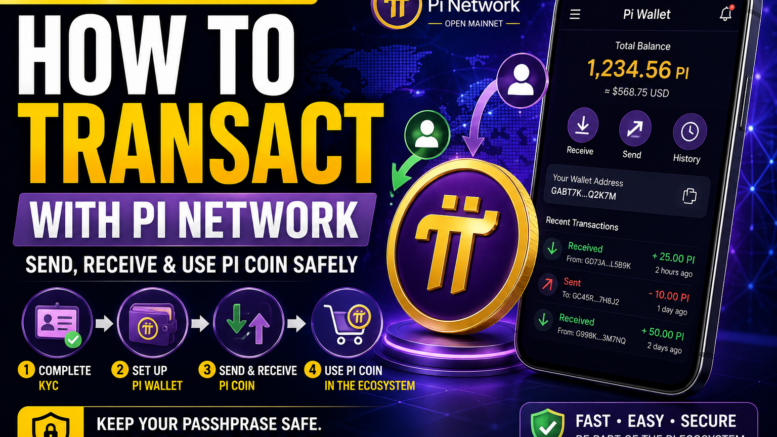
JAKARTA – As the Pi Network ecosystem continues to expand, more users are exploring how to use PI Coin for real-world transactions within the Mainnet environment. With millions of users worldwide and an increasing number of ecosystem applications, understanding how to send, receive, and use PI Coin has become an essential step for new members of the community.
Pi Network is a blockchain project launched in 2019 by a team of Stanford University graduates. Unlike many traditional cryptocurrencies, Pi Network introduced a mobile-first mining experience, allowing users to earn PI through a smartphone application. Today, the project’s focus has shifted toward building a functional ecosystem where PI Coin can be used as a medium of exchange.
Complete KYC Verification First
Before users can perform transactions, they must complete the Know Your Customer (KYC) verification process. KYC helps ensure that the Mainnet ecosystem consists of verified human users while improving overall network security.
After successful verification, users can migrate their PI balance from the mobile mining application to the Pi Network Mainnet wallet.
Set Up Your Pi Wallet
To send or receive PI Coin, users need to activate their Pi Wallet through the Pi Browser application. During wallet creation, a unique passphrase is generated.
The passphrase is the only recovery key for accessing the wallet and should never be shared with anyone. Losing the passphrase may result in permanent loss of wallet access.
How to Receive PI Coin
Receiving PI Coin is straightforward. Open the Pi Wallet, copy your wallet address, and share it with the sender. Once the transaction is confirmed on the Mainnet, the PI balance will appear in your wallet.
How to Send PI Coin
To send PI Coin, open the Pi Wallet through Pi Browser and select the Send option. Enter the recipient’s wallet address, specify the amount of PI you wish to transfer, review the transaction details carefully, and confirm the transfer.
Users are encouraged to perform a small test transaction before sending a larger amount to avoid mistakes.
Using PI Coin in the Ecosystem
As Pi Network continues to develop, several community applications and merchants have begun accepting PI Coin for selected goods and services. The availability of these services varies by region and depends on ecosystem development.
The Pi Core Team continues to encourage developers to create decentralized applications (dApps) that provide practical use cases for PI Coin.
Keep Your Wallet Secure
Security remains one of the most important aspects of cryptocurrency transactions. Users should:
- Never share their Pi Wallet passphrase.
- Verify wallet addresses before sending funds.
- Avoid unofficial websites or applications claiming to represent Pi Network.
- Follow announcements only from official Pi Network communication channels.
Stay Alert to Scams
As cryptocurrency adoption grows, scammers continue to target digital asset users. Pi Network repeatedly reminds its community that no official representative will ever request wallet credentials, passwords, or recovery phrases through private messages.
Users should avoid sending PI Coin to unknown individuals promising guaranteed profits or investment returns.
Looking Ahead
With the ongoing expansion of the Open Mainnet ecosystem, Pi Network aims to increase the real-world utility of PI Coin through decentralized applications, merchant adoption, and community-driven innovation.
Although the project continues to evolve, users are encouraged to conduct independent research, understand the risks associated with digital assets, and stay informed through official Pi Network announcements.
Sources :
Pi Network Official Website
Pi Network Official Blog
Pi Network Mainnet Documentation
Be the first to comment on "How to Transact with Pi Network (PI Coin): A Complete Guide for New Users"